Deploy Printer Drivers Script
Printer Drivers cannot be injected into SCCM’s drivers catalog and hence a driver package cannot be created for them. One option to get them installed is to package them into an MSI file and use this in conjunction with the DIFxApp merge module. There’s some information on DIFxApp.The following guide shows how I packaged the drivers for a Canon iR5075 printer which I was then able to deploy as an application in SCCM.Download the following tools to achieve this:. An MSI authoring program – in this instance Advanced Installer. The Orca MSI editor – available from. The DIFxApp merge module available from the Windows 7 driver kit –Install the Windows 7 Driver KitExtract the GRMWDKEN76001.ISO file and run the KitSetup.exe file.
Install all componentsOnce installed click Finish. Install OrcaRun the orca.msi file. Click Next.Accept the licence agreement and click Next.Choose a Complete installClick Install.Click Finish to complete the installation.Install Advanced InstallerRun the Advinstl.msi setup file. Click Next.Click Next to accept the default install location.Accept the licence agreement and click Next.Click InstallClick Finish to launch the Advanced Installer.Create the MSI installDownload any printer drivers and extract to the.inf files.In Advanced Installer choose a Simple template.Enter any product details for the drivers. Note that details here will appear in Add/Remove Programs applet.Click the Files and Folders menu on the left hand pane.Click the Files icon in the Files and Folders menu.Navigate to your extracted drivers folder and then click Open.Click the Home menu and choose Build.
Enter a project name and Save.Click Ok once the MSI has been built.Open Orca and open the created MSI file. Click ToolsMerge Module.Click Browse.Import the x64 DIFxApp merge module from the directory C:WinDDK7600.16385.1redistDIFxDIFxAppMergeModuleamd64.
Click Open then click Ok.Note that I am using the x64 DIFxApp, the x86 version is located in the folder C:WinDDK7600.16385.1redistDIFxDIFxAppMergeModulex86Click Accept to any merge failures.In the File table, find the row containing the driver’s.inf file and copy the value from the Component column.Click the MsiDriverPackages table and click Add RowIn the component field paste in the component copied earlier, in this instance aussdrv.dlIn the Flags field enter the value 4. Fujitsu siemens audio drivers windows 7 free download. Save the MSI file.Installing the MSI file.Run the final MSI file. Click Next.Click Next.Click Install.Click Ok at the end of the installation.Click Finish to complete the installation.To silently install the software run the MSI file with the following switches.“.msi” /qn. Details on the msidriverpackage custom table are located here.
Value 4 means ‘By default, DIFxApp adds an entry to Programs and Features in Control Panel for the driver package that this component represents. This flag configures DIFxApp so that it does not create a Programs and Features entry for the component.’Installing the driver kit is required as you need to use the DIFxApp merge module. This module manages the association between the msidriverpackage and the application that installs the driver package, amongst other operations.
Sccm Deploy Scripts
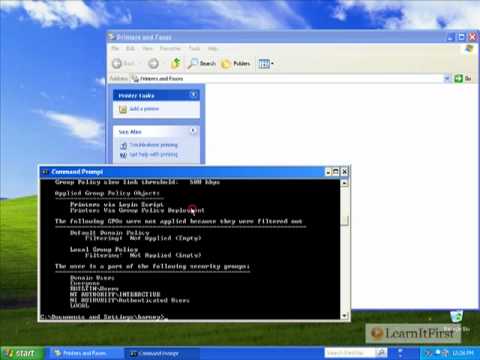
This video is part of LearnItFirst's Windows Server 2008 Administration course. More information on this video and course is available here:In this video we will take a look at the traditional method of deploying a printer with a login script. To begin we will first create the script to map the printer and finish by verifying deployment.Highlights from this video:- Wrting a simple VB script code for mapping printers- Verifying and testing printer deployment- Automating printer script via group policyand much more.
Comments are closed.